

eco-friendly practices : ค้นหาหนังสือธรรมะ หน้า 24 / 26
หน้าหนังสือทั้งหมด
169
Understanding Right Livelihood and Right Effort in Buddhism
but the bodhisattva urged him on. The merchant, realizing what he had lost through his greed choked up blood. It was at this time that he vowed to get his revenge on the bodhisattva in every future li
The text discusses the principles of Right Livelihood and Right Effort in Buddhism, exemplified by the bodhisattva's encounter with a greedy merchant. The merchant's greed leads to his demise, contras
175
Monitoring and Discretional Mindfulness
7.1 Monitoring Mindfulness
This form of mindfulness is mindfulness that is constantly monitoring the level of wholesomeness in the mind — never letting wholesomeness slip away from the mind and its in
Monitoring mindfulness involves a constant awareness of the wholesomeness in the mind, akin to a treasurer who tracks the assets of an emperor. It encompasses the recognition of various virtues essent
176
Understanding Right Concentration in Mindfulness
the emperor. Similarly, discretional mindfulness monitors
all mental phenomena — if it is unwholesome, then to try to
reduce it. If it is wholesome, to give it the chance to grow.
8. Right Concentrat
This section discusses the concept of Right Concentration in mindfulness, highlighting its two essential characteristics: supporting role and focusing role. It draws analogies to illustrate how concen
191
The Significance of the Dhammacakka Pavattana Sutta
Siddhattha's footsteps. When Siddhattha was training him-self under the auspices of Ālara and Udaka it was Koṇḍañña who was also to train himself in Siddhattha's footsteps. Thus, Koṇḍañña, along with
The Dhammacakka Pavattana Sutta is pivotal in Buddhism, offering a master-plan for all subsequent teachings by the Buddha. It was delivered to a group of five adept meditators, setting a clear framewo
196
The Dangers of Sensual Pleasures and Self-Mortification
1.1 Kāmasukhallikāyunāga: indulgence in the various sensual pleasures is harmful in the following ways:
1.1.1 Hino: It makes the mind coarse and clouded;
1.1.2 Gammo: (this word literally means "house
In Buddhist teachings, indulgence in sensual pleasures is deemed harmful as it clouds the mind, encourages a household life, collects defilements, and is ultimately unprofitable. Similarly, self-morti
204
The Noble Eightfold Path and Its Fruits
earlier:
1. Right View [Sammā Ditthi]
2. Right Intention [Sammā Saṅkappa]
3. Right Speech [Sammā Vāca]
4. Right Action [Sammā Kammanta]
5. Right Livelihood [Sammā Ājīva]
6. Right Effort [Sammā Vāyāma]
The Noble Eightfold Path consists of eight practices aimed at ethical and mental development, leading to enlightenment. The path includes Right View, Intention, Speech, Action, Livelihood, Effort, Min
218
General Index of Meditation and Mindfulness Concepts
Appendix C:
General Index
absent-mindedness: overcome by meditation 124
absorption: factors 123, 129-132; of neither-perception-nor-non-perception 193; fifth 131; first 85, 123, 129; fourth 129; sec
This general index compiles significant terms and concepts related to meditation and mindfulness practices. It includes terms like absent-mindedness, absorption, and aggregates of clinging, helpful fo
220
Exploring the Path to Enlightenment in Buddhism
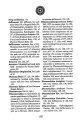
101; enlightenment mechanism, chanting, Dhammacakkapavattana explained by Dhammakaya 111; Sutta 10-11, 209-16 knowledge arising to reach enlightenment 140-1; practice 94, metaphors: dog and lion 94; g
This text delves into various aspects of Buddhism, focusing on the mechanisms of enlightenment through chanting and the Dhammacakkapavattana Sutta. The practices necessary for attaining enlightenment
222
Understanding Dhammakāya and Defilements in Meditation
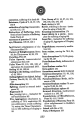
deep meditation 114
defilement 122: different, for each
inner body 135; of Angelic Body 135;
of Dhammakāya Anāgāmi 137; of
Dhammakāya Gotrabhu 136; of
Dhammakāya Sakidāgāmi 136,
137; of Dhammakāya Sot
The text provides an in-depth examination of the Dhammakāya concept, explaining various levels such as Dhammakāya Anāgāmi, Gotrabhu, and Sakidāgāmi. It discusses the nature of defilements and how arah
224
Insights on Suffering and Enlightenment
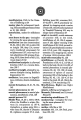
execution, suffering of at death 68
Existence, Cycle of 9, 16, 37, 178, 185-6
extinction of craving, transcendental 100, 115, 175
Extinction of Suffering, Noble Truth of(see Cessation of Suffering, No
This text delves into pivotal Buddhist doctrines centered around suffering and enlightenment. It discusses the cycle of existence and the importance of overcoming craving. With references to meditativ
227
Understanding Meditation and the Middle Way in Buddhism
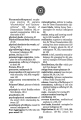
manifestation, Path to the Cessation of Suffering as 54
master plan for subsequent teaching, Dhammacakkapavattana Sutta as 10, 186, 189-90
materialism, makes for selfishness 81
meat burnt to the pan -
เนื้อหานี้สำรวจการทำสมาธิและแนวทางสายกลางที่เป็นส่วนสำคัญในคำสอนของพระพุทธเจ้า โดยอธิบายถึงความสำคัญของการตั้งมั่นเป็นสติในปัจจุบัน และการทำความเข้าใจรูปแบบของความรู้สึกและปรากฏการณ์ในจิตใจ การทำสมาธิ
229
Exploring Key Buddhist Concepts and Practices
Phramonkothpumuni: emphasises practice 12; explains "dhammikāya" and "āyatannibbāna" 102; founder of Dhammakāya Tradition 102; respected commentarian 102-3; sixteen tasks of 207 physical deeds, wholes
This text delves into various aspects of Buddhist philosophy, focusing on the teachings and practices associated with the Dhammakāya Tradition founded by Phra Mongkothpumuni. It highlights the signifi
230
Insights into Buddhist Teachings
Kondaṇña 142; abstention from killing 158-60; instilled by loving kindness 141; tool of Right Livelihood 144
Right View 20, 39-40, 115, 117, 118, 141, 197: transcendental 39-40; mundane, 39, 147-51; a
This text discusses various Buddhist concepts such as Kondaṇña's role in understanding Right View and the importance of loving kindness and self-discipline in achieving liberation. It highlights examp
233
Exploring Suffering and Enlightenment in Buddhist Philosophy
dying 58, 67-9, 199; of exposure to third absorption 129, 130, 131
hateful things 71-2; of illness, 12, thought, discursive, sense 96, 100
46, 57, 66-7, {metaphors: donkey thought-conception: discursi
This text delves into the intricate themes of suffering and enlightenment within Buddhist teachings. It explores the various aspects of suffering, including its origins and manifestations, and the pat
236
Glossary of Buddhist Terms
Akiṇiṭṭhā (P. Realm of Supreme anurakkhāṇa-paddhāṇa (maintre Brahmas: see form Brahmā
akusalahamma (see unwhole- anusayā (see subtle defilements)
someness) apilapanasati (see monitoring as- alābha (se
This glossary provides definitions and explanations of essential Buddhist terms, including various realms, states of mind, and notable figures. Key concepts such as Anāgamī (non-returner), anatta (not
243
Buddhist Terminology and Concepts
Speech at the transcendental level) see sense consciousness) manussasampatti (see worldly wealth) Mara q.v. (P. devil, demon) maggañāṇa (see knowledge of the path out of defilements) maraṇa (see dying
This text delves into essential Buddhist terms and their meanings. It covers concepts such as Mara (the demon), Mettā (loving-kindness), and the significance of terms like 'maraṇa' (dying) and 'mutti'
246
Fundamental Concepts in Buddhist Psychology
rasa-saṅchetana (gasticatory volition: see sense volition)
rasa-saṃnā (gasticatory sense registration: see sense registration)
rasa-tanḥa (gasticatory craving: see sense craving)
rasa vicāra (ga
This text elaborates on significant concepts in Buddhist psychology, including gasticatory and visual perceptions such as rasa (taste) and rūpa (form). It addresses terms like gasticatory volition, se
248
Glossary of Buddhist Terms
sota viṁñāṇa (auditory consciousness: see sense consciousness)
Subhakinhā (P. realm of Brahmās with a steady aura: see form Brahmā realms)
Suddassā (P. realm of the Brahmās who are beautiful: see for
This glossary provides definitions of key terms in Buddhism, including various realms of existence, aspects of consciousness, and significant teachings. It covers concepts such as 'sota viṁñāṇa' (audi
249
Understanding Key Buddhist Concepts: A Glimpse into Mindfulness and Liberation
feeling: see aggregates) vedanānupassanā-satitapatthā (see mindfulness of feeling in the feeling) Vehapphalā (P. realm of Brahmas with abundant reward: see form Brahma realms) vibhavaṭaṅhā (see cravin
This text provides an in-depth understanding of various important Buddhist concepts. It covers essential terms such as vedanānupassanā (mindfulness of feelings), vipassanā (insight), and viriya (energ
258
The Benefits of Meditation: Cooperation, National and Spiritual Growth
● Cooperation: Family members will be more enthusiastic to honour their duties and co-operate towards solving shared problems.
3. National Benefits
● Peaceful Society: most grave social problems origi
Meditation encourages family cooperation and enhances duty fulfillment. It contributes to a peaceful society by addressing root social issues like crime and substance abuse. Improved respect and hones